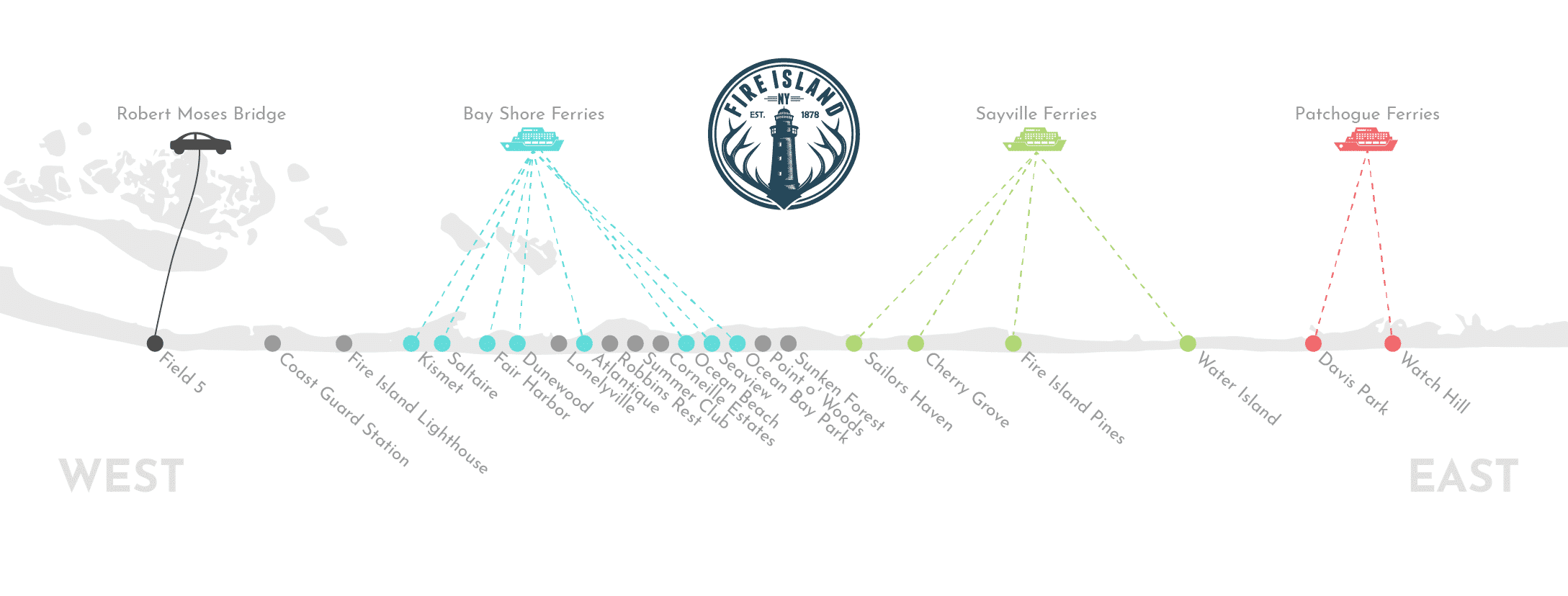
Discussion the grassroots campaign to preserve the Sunken Forrest from development in the 1950’s was spoken with considerably more detail and intimacy than some of the more general Fire Island histories. This remains consistent with Dr. Sayre’s Point O’ Woods roots, as the private gated community is largely credited with spearheading the organized movement to “save” the Sunken Forrest – an event that many now view today as a forerunner to the island-wide movement to prevent Robert Moses from constructing a highway down the middle of the barrier beach of Fire Island which lead to the establishment of Fire Island as a National Seashore on September 11, 1964.
However the lecture did not just talk nostalgically about the past. Sayre injected some harsh realities about the “environmental degradation” of Fire Island over the past century. Salt hey is a thing of the past due to high nitrogen content in the bay waters that has killed off the native grasses only to be replaced by the ubiquitous and invasive fragmite reeds in Fire Island’s wetland areas. He also spoke of Robert Cushman Murphy’s groundbreaking article in Natural History Magazine in 1950 simply entitled “August on Fire Island Beach” in which 60 species of songbirds were identified. “While I have not conducted a study myself, I believe anyone would be hard-pressed to identify 60 different bird species during the month of August on Fire Island today,” he stated soberly. Sayre then went on to speak pointedly against vehicular traffic on the beach, jet skis in the bay, as well as low-flying helicopters and small private aircraft doing their share of collective damage to Fire Island’s fragile ecosystem. He furthermore urged the ferry companies to rethink their policy of bringing thousands of weekend party revelers to Fire Island and do their share of damage through litter and noise pollution. (A statement that brought a hearty round of applause from the audience.)
Then the subject of white-tailed deer came up. For decades this has been a hot-button topic on Fire Island. No doubt Dr. Sayre knew he was venturing into controversial territory, but he did not flinch on his position concerning the matter. He suggested a hunt or culling of the white-tailed deer population was necessary to restore the ecological balance of Fire Island. “Contraceptives only are effective when the deer herd is under control,” he responded during the question and answer session of his talk. Some folks in the audience cheered at these sentiments, while other faces tightened and remained quiet. Sayre concluded the lecture by comparing the struggle to protect and restore the ecology of Fire Island to that of the opposition to the Robert Moses road in the 1960’s, if not a continuation of the same struggle. “None of this will be easy,” he said “but we need to get started.”
Note: The officers of the Ocean Beach Environmental Commission have not returned FireIsland.Com’s inquiry on whether or not they endorse Robert Sayre’s position on the white-tailed deer with an official response.